

When Did Police Body Cameras Start
More police officers on the beat may presently have a new partner -- one that's pocket-size, rechargeable, and looks the other way during late-night java breaks.
On Monday, President Barack Obama appear a plan to provide $263 million in federal funding for body cameras and training for local police departments. If Congress approves the program, it would provide enough money to purchase around 50,000 cameras.
In the wake of the unrest in Ferguson, Missouri, over the shooting of teenager Michael Dark-brown, some lawmakers have been calling on police departments to prefer the cameras to increase transparency. Information technology'southward an idea that is being tested in several cities, including Los Angeles, New York and Chicago.

Taser (yes, the company that makes the Taser stun device) has sold body cameras to more than i,200 police departments, according to Steve Tuttle, the company'south vice president of strategic communications.
He estimates that effectually 20,000 of Taser's cameras are beingness used in the field. That number could see a boost every bit police departments reply to public pressure and take advantage of federal funding.
"In the quarter earlier Ferguson happened, we saw a dramatic increment in sales," Tuttle told NBC News. "And so Ferguson striking and that has created this tremendous public awareness about body cameras."
Body cameras 101
Most body cameras measure out around 3 inches long and clip to a police officer's uniform. Taser makes one of the more than popular models, the Axon Body, as well as the Axon Flex, which can attach to a pair of sunglasses, a collar or lid for a showtime-person point of view.
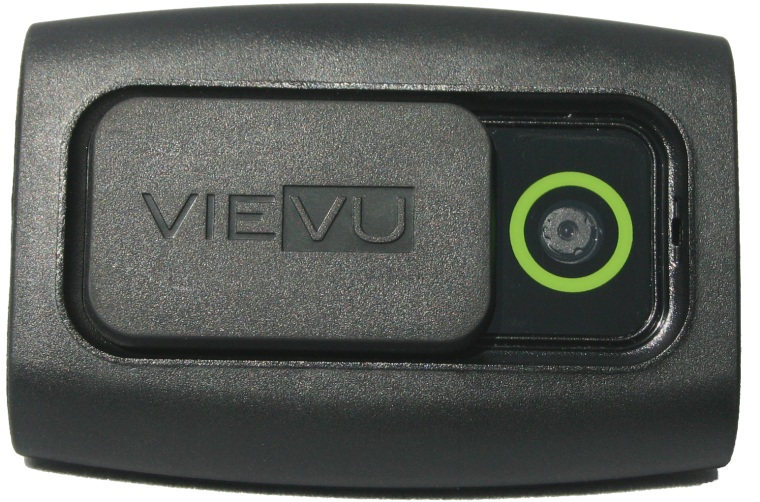
The other major actor in the body photographic camera market is Vievu, which makes the LE3. Other competing companies include Panasonic, Pro-Vision and StuntCams.
The cameras run anywhere from $129 to $900. Just similar any camera, they vary when it comes to features. Some offer HD video and the power to stream to a smartphone app.
The Pro-Vision Bodycam even offers dark-vision. It's a feature that some police departments want and others don't, mostly because some courts only desire footage that reflects what an officeholder could see at the time of an incident, a Pro-Vision spokesperson told NBC News.
The high-end models are normally water-resistant, good news for cops in common cold and rainy climates
Where does all that video go?
"These cameras produce a vast corporeality of data that has to be stored deeply," Michael White, an Arizona Country University criminology professor, told NBC News. "Video storage is the biggest issue that police departments are dealing with."
Police departments tin can either store that video on their own servers or pay a monthly fee for cloud-based storage.
Taser offers admission to Amazon-powered Evidence.com, a cloud service that lets law officers hands share video with commune attorneys and other law enforcement agencies.
"Yous are taking this digital tsunami of data and putting information technology into the cloud without the law enforcement agency having to deal with firewalls, enterprise services and spending lots of coin to buy hard drives," Tuttle said.
While some devices demand to be connected via USB to download video, the Axon cameras send information automatically when connected to their Internet-connected bombardment charger.
Finding space to store all of that video is 1 challenge, being able to notice the footage subsequently is some other. Officers need to be very conscientious about labeling each clip with data similar the date and incident number, said White, or really locating the footage during a court example could exist very difficult.
Are they continuously recording?
Police departments take different policies, simply for the most part trunk cameras aren't recording for a police force officeholder'south entire shift.
Some police force tape merely when they think there is going to exist an arrest, while others do information technology anytime they are interacting with a civilian. This saves battery life and prevents the servers from being filled with footage of police officers eating lunch and going to the bathroom.
The loftier-end models avowal around 12 hours of battery life. When turned on, Taser'southward Axon records in buffer mode, which consists of video — but not audio — that is deleted afterwards 30 seconds. The constabulary officeholder then double-clicks the photographic camera to kickoff recording both.
The resulting clip includes the preceding 30 seconds of buffer video footage —a tool meant to protect the privacy of officers going almost their daily business organization, while at the aforementioned fourth dimension allowing police to take hold of footage of a crime that occurs moments earlier they hit the record button.
The devices aren't perfect. Some police force officers have complained about the time it takes to transfer video from the cameras, said White, who wrote a report on torso cameras for the U.S. Department of Justice. And police departments pressed for cash might want to wait until prices come down.
Later on the recent unrest in Ferguson, Missouri, it'southward a skillful bet that sales of police body cameras volition increase.
"Looking at info from the manufacturers, I would say most 5,000 out of around 18,000 total police departments are using them," White said. "That number is going to grow exponentially."

Source: https://www.nbcnews.com/tech/innovation/digital-partner-heres-how-police-body-cameras-work-n259211
Posted by: malonetheried.blogspot.com
0 Response to "When Did Police Body Cameras Start"
Post a Comment